Dr Ben Murtagh reviews ‘The Bizarre True Story of Indonesia’s Iconic Horror Star’…
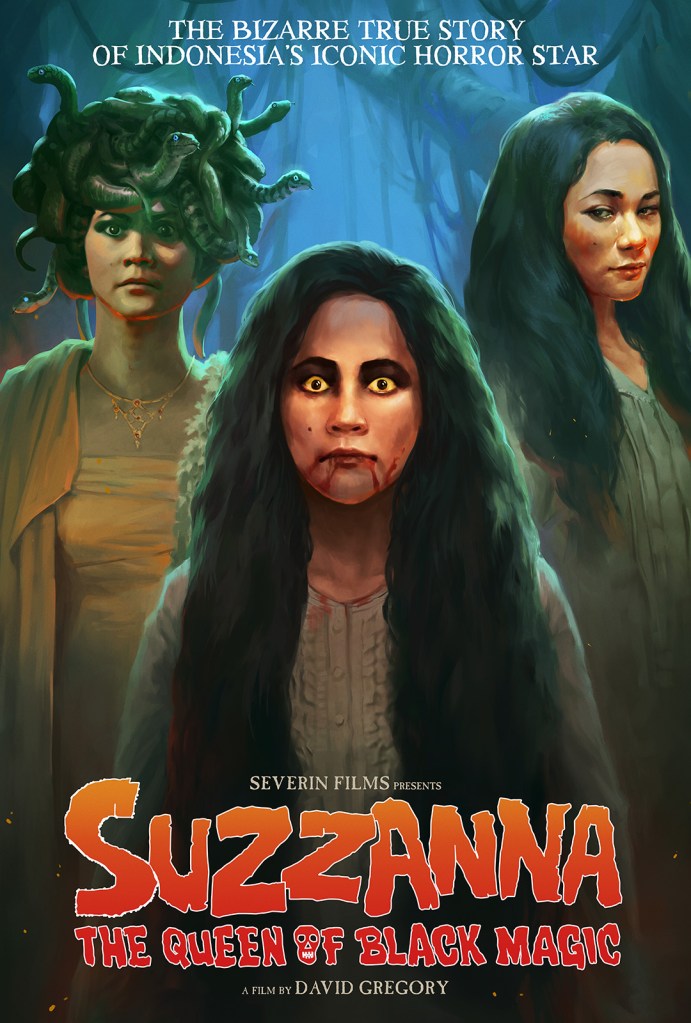
Director, David Gregory, 2024. Severin Films
Review by Ben Murtagh, SOAS University of London
Horror and the supernatural have long been a mainstay of mainstream film production in Indonesia. In recent years, films such as Joko Anwar’s Pengabdi Setan (2017) and Perempuan Tanah Jahanam (2019) have attracted record audiences in Indonesia but also secured international recognition as well as distribution via global streaming platforms – still quite a rare feat for Indonesian movies. These movies, which some international critics have seen as part of a new wave of horror films coming out of Southeast Asia, are characterized not just by their scary moments but also by their strong emphasis on local and traditional folk beliefs. They owe much to an earlier generation of Indonesian horror movies form the 1970s and 1980s, when the genre was dominated by film director Sisworo Gautama Putra and actor Suzzanna.
Suzzanna passed away in 2008, but her reputation and cult status in Indonesia continues to grow. Famed for her performance in the role of all manner of horrifying but also often seductive beings, as well as for a mysterious and dramatic private life, her influence on Indonesian popular culture is as prominent as ever. Her impact is not just evident in the critically renowned films of Joko Anwar, but also in recent films such as Suzzanna: bernapas dalam kubur (dirs. Rocky Soraya and Anggy Umbara, 2018) or Suzzanna malam jumat kliwon (dir. Guntur Soeharjanto, 2023), which have incorporated Suzzanna’s very name into the title of the films. Both films star Luna Maya in the titular role and are loose reworkings of films from the 1980s which starred Suzzanna. The main character is a purposeful and obvious homage to the star of the 1980s originals, part perhaps of a wider nostalgia for films and series from the Indonesian New Order period, but undoubtedly confirmation of Suzzanna’s enduring commercial appeal.
Suzzanna; the queen of black magic rides on the wave of this renewed international interest in Indonesian horror but also embraces the cult following for Indonesian horror from the 1980s and 90s. Taking Suzzanna as its subject, this documentary directed by David Gregory examines Suzzanna both onscreen and offscreen in a slickly produced feature, just over 90 minutes in length. The film includes clips from numerous interviews with family and friends, academics, and industry professionals, as well as archive footage of interviews with Suzzanna herself. Richly enhanced by a large number of clips, the film serves as an excellent profile of the actor, her films, and a wider Indonesian context which will benefit and delight both students and fans of cinema, horror and the supernatural, regardless of their prior knowledge of Indonesia’s film history.
Severin, the company behind the documentary is a Los Angeles based studio with a focus on ‘rescuing, restoring and releasing the works of Oscar nominees and cult icons alike’. It has so far produced seven films, mainly focusing on cult or horror films and their histories, including Brucesploitation film Enter the Clones of Bruce (dir. David Gregory, 2023), and a widely acclaimed Woodlands Dark and Days Bewitched; a history of folk horror (dir. Kier-La Janisse, 2021). While certainly aiming for broad audiences and reveling in the more offbeat and sometimes sensational aspects of film history, Severin’s documentaries are also underpinned by a close attention to film history. Suzzanna; the queen of black magic is no exception. Alongside co-producer Ekky Imanjaya, there is sustained input from other Indonesian film scholars and critics including Thomas Barker, Quireen van Heeren, Hikmat Darmawan, Fala Pratika and Katrina Irawati Graham. To varying degrees these experts also speak as fans, ensuring that the viewer’s comprehension of Suzzanna’s film career, which included 42 movies as an actor, is not just in terms of film history, but so too the fascination and appeal Suzzanna and her films continue to hold. As one of the voice clips in the opening of the movie states, ‘her piercing look and cold stare made the late Suzzanna such a mysterious figure’. A mysterious figure fully deserving of this feature length documentary.
While the film’s primary focus is on her horror films and persona, the documentary provides an excellent resource in helping us to understand how she broke into the film world, her earlier films, and family life in the 60s and 70s. This includes her first marriage to producer and actor Dicky Suprapto, as well as the impact of the tragic death of her son Arie. The story of first breaks, and the mix of connections and chance are always intriguing. For Suzzanna, Thomas Barker relates, it was a case of entering a talent contest and being spotted by director Usmar Ismail, leading to a role and eventual festival awards for her role in the 1958 classic Asrama Dara. By the 1970s she had progressed to appearing in several films marked by themes of the rural woman exploited in the city, and female prostitution, such as Bernafas dalam lumpur (dir. Turino Djunaidy, 1970) or Bumi makin panas (dir. Ali Shahab, 1973), often described as film berani or hot films or perhaps exploitation movies because of the focus on use of the female body to attract audiences.
The film then explores the second and perhaps best remembered period of her career when she came to personify the horror genre. The clips, from such notable films as Sundelbolong (dir. Sisworo Gautama Putra, 1981) and Nyi Blorong (dir. Sisworo Gautama Putra, 1982) that accompany this part of the film are the most memorable, invoking mixtures of shock, laughter and genuine surprise at the ingenuity and achievement of many of the special effects produced. Interviews with technical crew and directors including Gope Samtani, co-founder and president of Rapi Films, and Ram Soraya, founder and president of Soraya Intercine films, alongside the academic experts really enhance our understanding of the stories behind the films. Didin Syamsudin, Suzzanna’s longtime makeup artist, explains how they achieved all manner of special effects. I wonder how many actors today would be prepared to perform with their head covered in writhing snakes as Suzzanna did on several occasions.
Those familiar with Indonesia and Southeast Asia will likely know of the number and range of ghosts, and supernatural figures which are part of the everyday belief system of many in the region. An important aspect of this documentary film is its exploration of this plethora of ghosts to contextualise Suzzanna’s films and the wider horror and supernatural tradition within wider Indonesian popular culture. Director and fan Joko Anwar, who has drawn on this folk horror in a number of his own films in the post-reformasi period, tells us in one clip that he has counted a total of 44 different beings in the Indonesian tradition. One of the most compelling arguments in the documentary is that for Indonesians today, the imagining of many of these supernatural beings has been filtered through the lens of Suzzanna’s performances. As Ekky Imanjaya states in the film’s press pack, ‘In Indonesia, Suzzanna is horror and horror is Suzzanna’.
Suzzanna herself was and remains a subject of mystery and fascination. As Hikmat Darmawan notes in the film, she was fully immersed in the world of ‘traditional rural mysticism’. Details on her habit of eating jasmine flowers, and her meditation and bathing rituals are elaborated on by her second and much younger husband, the actor Clift Sangra. Towards the end of the documentary, we also come to learn of the mystery and rumours around a shooting and alleged plot by Suzzanna’s second husband to kill his wife. It is intriguing that different family members involved in counter accusations against each other all agreed to take part in the same film, but the audience is maybe left a little unsatisfied by the unresolved and contradictory claims. But perhaps this story is just one more layer of the myth and mystery around Suzzanna that continues to build over time, and to which this documentary will now contribute.
One of the most provocative statements in Suzzanna; the queen of black magic comes when director and interviewee Joko Anwar argues that Suzzanna the actor rivals and indeed surpasses Boris Karloff, Vincent Price and Bella Lugosi for her status in the world of horror films. Joko’s statement will undoubtedly provoke some sharp intakes of breath, as was likely intended. But it is also an argument for decentering western horror and recognising the local strengths in film making and folk horror narratives that Suzzanna and the industry professionals she worked with encapsulate. Alongside the offscreen mystery around the actor and the tragedy and intrigue associated with her family life, Suzzanna: the queen of black magic certainly makes a case for recognizing Suzzanna as a remarkable and perhaps unique figure in global horror history. For anyone wanting to know more about Indonesian movies and the horror genre, I urge you to seek out this excellent documentary and make up your own mind.

 ASEAS
ASEAS 