“Global Southeast Asia: Continuity and Change”
St John’s College, University of Cambridge, 15–17 September 2025
Sponsors:


The ASEAS 2025 Conference was held at St John’s College, University of Cambridge from 15-17 September 2025. The conference explored the theme “Global Southeast Asia: Continuity and Change,” and welcomed papers that examined the dynamic and evolving nature of Southeast Asia in the context of global interconnectedness, political change, environmental challenges, cultural flows, and socio-economic transformations.
The biennial ASEAS Conference offers an invaluable opportunity to engage with the latest research, foster collaborations, and contribute to shaping the future of Southeast Asian Studies.
2025 Conference Programme
Scan the QR code below to download the in-person programme.

Registration Fees
- Standard – £225.00 (or £200.00 for current members1)
- Global South – £125.00 (or £100.00 for current members)
- Student/Retiree – £115.00 (or £100.00 for current members)
- Online only – £65.00 (or £50.00 for current members)
Please note the non-member price includes a one-year membership of ASEAS.
Keynote Speakers
Monday 15 September 2025

Professor May Tan‑Mullins
Provost and Chief Executive Officer;
Associate Pro‑Vice‑Chancellor (ASEAN); Professor of Sustainability;
University of Reading Malaysia
Keynote:
Reimagining Futures: Harnessing AI and Higher Education for a Sustainable Southeast Asia
As Southeast Asia faces intensifying climate challenges, urban transitions, and widening inequalities, the transformative potential of artificial intelligence (AI) offers both promise and peril. In this keynote, Prof. May Tan-Mullins, Professor of Sustainability at the University of Reading and CEO of its Malaysia campus, explores how higher education can play a catalytic role in shaping ethical, inclusive, and sustainable pathways in the AI era.
Drawing from her interdisciplinary research and leadership experience across the region, Prof. Tan-Mullins will examine the intersections between AI, sustainability, and education in Southeast Asia. She will interrogate how universities can move beyond traditional paradigms to become adaptive institutions that cultivate future-ready leaders, foster socially responsible innovation, and ensure that technological advancement supports environmental resilience and social justice.
Through a critical lens, the keynote will also consider how regional collaboration, culturally grounded knowledge systems, and transnational partnerships can drive impact in an increasingly digital and climate-constrained world. With a particular focus on the Global South, Prof. Tan-Mullins will challenge us to rethink the role of higher education as both a driver of change and a steward of values in an AI-driven future.
Bio:
Prof May Tan‑Mullins is a distinguished political ecologist and committed advocate for environmental justice, sustainable development, and higher-education innovation across Southeast Asia. She currently serves as Provost and CEO of the University of Reading’s Malaysia campus, where she also holds the position of Associate Pro‑Vice‑Chancellor (ASEAN) and Professor of Sustainability.
Her research focuses on the political ecology of rising China, environmental and energy justice, poverty alleviation, and building resilience among vulnerable communities, particularly in the aftermath of disasters such as Typhoon Yolanda.
She has led major projects funded by ESRC (UK), NSFC (China) and the Research Council of Norway, and authored influential work on smart eco‑cities and infrastructure-driven environmental politics in Asia and Africa.
She leads Reading’s strategic expansion in Southeast Asia, spearheading initiatives that integrate research, teaching, and partnerships to promote sustainable development and food systems resilience in the region.
Prof Tan‑Mullins has consulted for international agencies including the UNDP, National Bureau of Asian Research, Revenue Watch Institute, and Chinese governmental bodies, and provided executive training on sustainability, ESG, and risk mitigation for Belt and Road Initiative projects.
She is also a Rockefeller Bellagio writing residency fellow and has received provincial and municipal awards from Chinese authorities in recognition of her impact in higher education in China, environmental governance and international development .
In addition to her institutional leadership, she is an advisor to the green startup Skilledin Green, and a member of the executive committee of the Association of Southeast Asian Studies.
Tuesday 16 September 2025
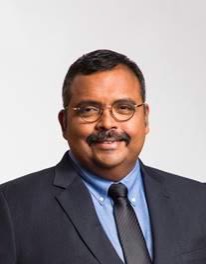
Dr Kumar Ramakrishna
Professor of National Security Studies;
Provost’s Chair in National Security Studies;
Dean, S. Rajaratnam School of International Studies;
Research Adviser, International Centre for Political Violence and Terrorism Research;
S. Rajaratnam School of International Studies, Nanyang Technological University
Keynote:
British Propaganda, General Templer and the Malayan Emergency (1948-60): Lessons for Modern Counterinsurgencies?
Mainstream historiography suggests that General Sir Gerald Templer, who was both High Commissioner and Director of Operations in Malaya (1952-54) at the height of the armed insurrection of the Malayan Communist Party (MCP) from 1948 to 1960, had a transformational impact on the conflict.
While his political and military-operational adjustments helped stabilise an embattled colonial government in Kuala Lumpur against the MCP onslaught, his innovative policy tweaks generated an effective propaganda impact, helping pave the way for eventual defeat of the MCP militants by the end of the decade.
Indeed, Templer was said to have popularised the phrase “winning hearts and minds” during his tenure in Malaya. Alternative and postcolonial interpretations of Templer’s role however, argue that, quite aside from any “hearts-and-minds strategy”, Templer arrived when his predecessor’s coercive approach was already shifting the tide against the MCP, and more fundamentally, the British maintained long-standing coercive racial and gender hierarchies throughout the Emergency era – and this was the real reason for their eventual success.
Dr Ramakrishna’s keynote will examine the key issues of the debate, and suggest potential enduring lessons for modern counterinsurgencies.
- Members are those with a valid ASEAS membership at the time of registration. Full price conference fees include a 1 year membership of ASEAS. ↩︎
For further information about about the 2025 conference or our upcoming conferences, please contact operations@southeastasianstudies.org
 ASEAS
ASEAS 